Stadtquartier Eibengasse L1 - Competition 1st place
City Crowns and Housing Rows – From Cluster Units to Maisonettes
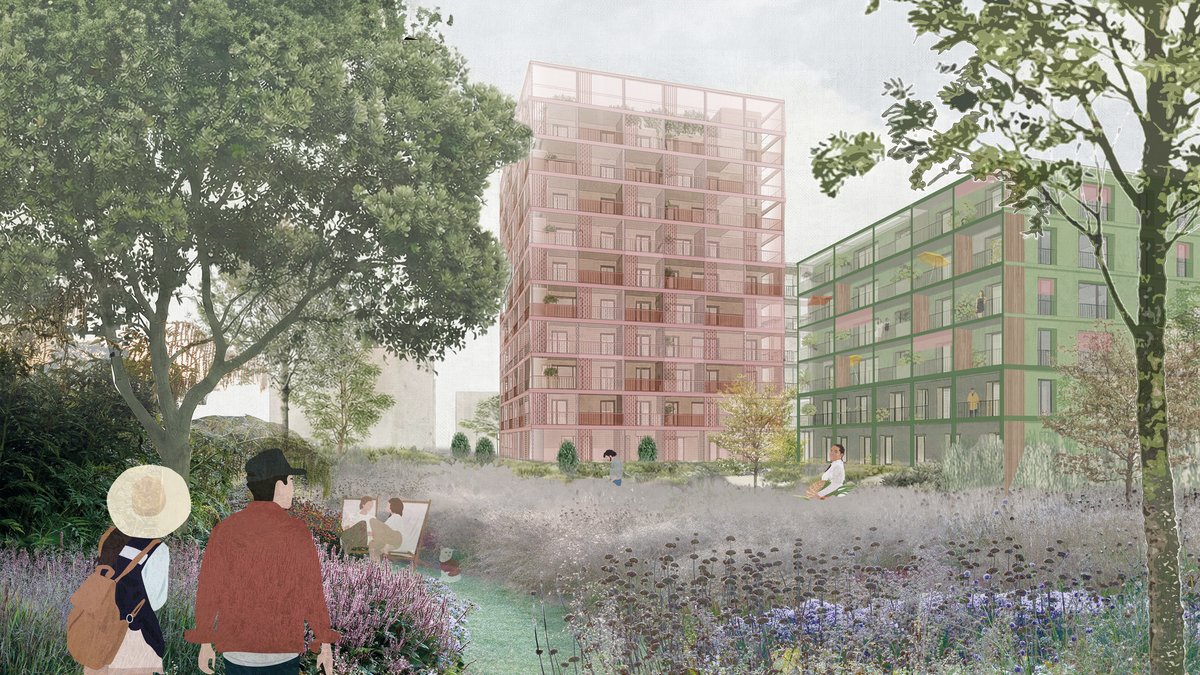
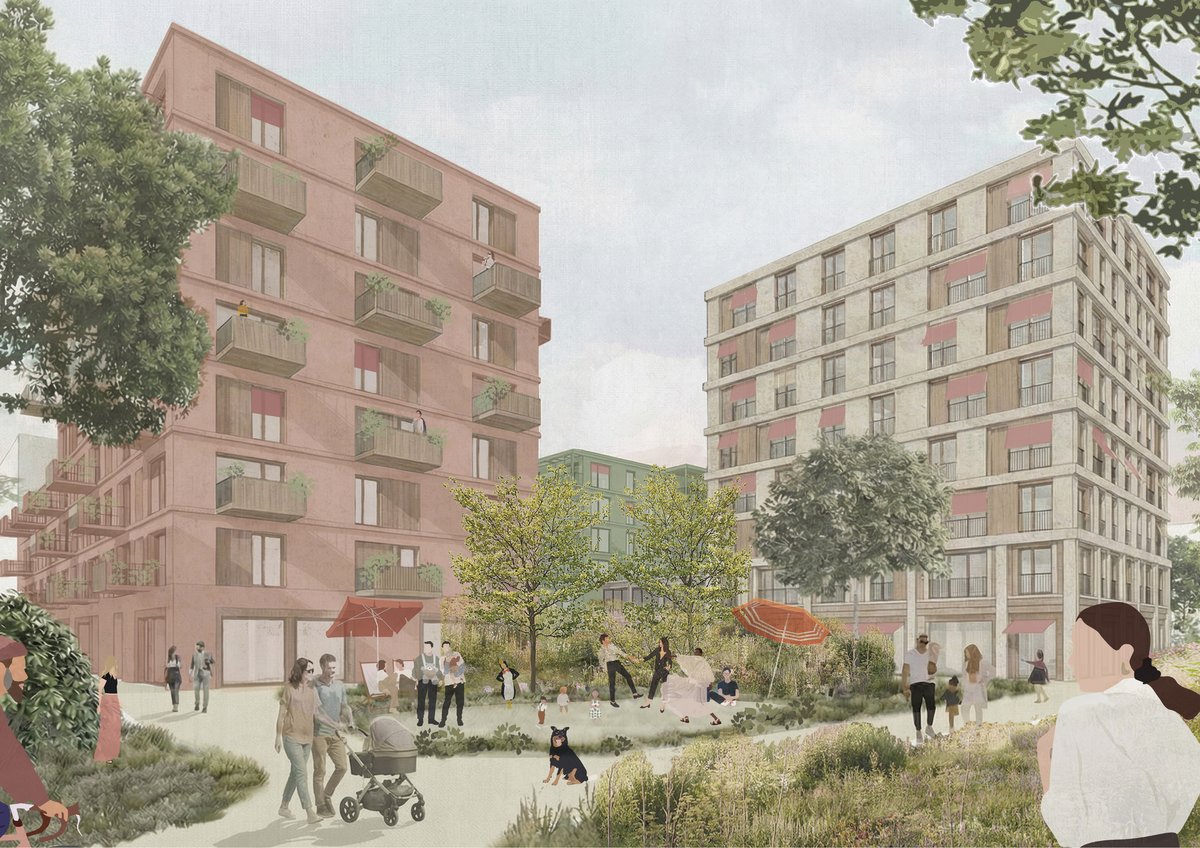
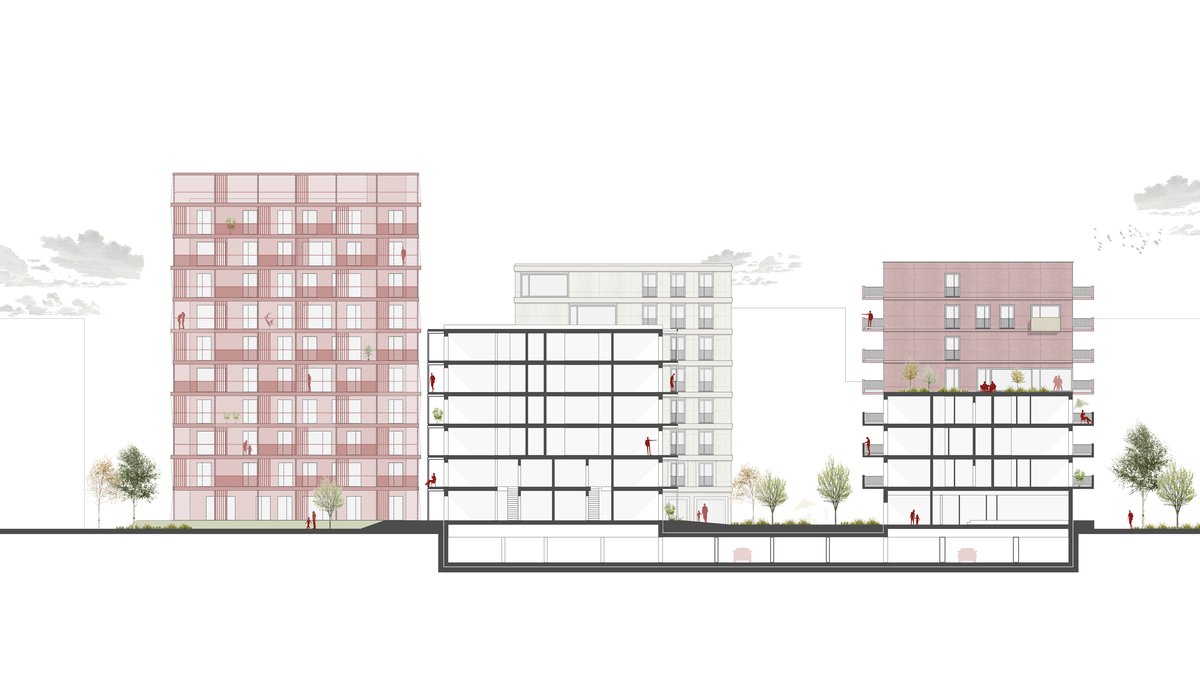
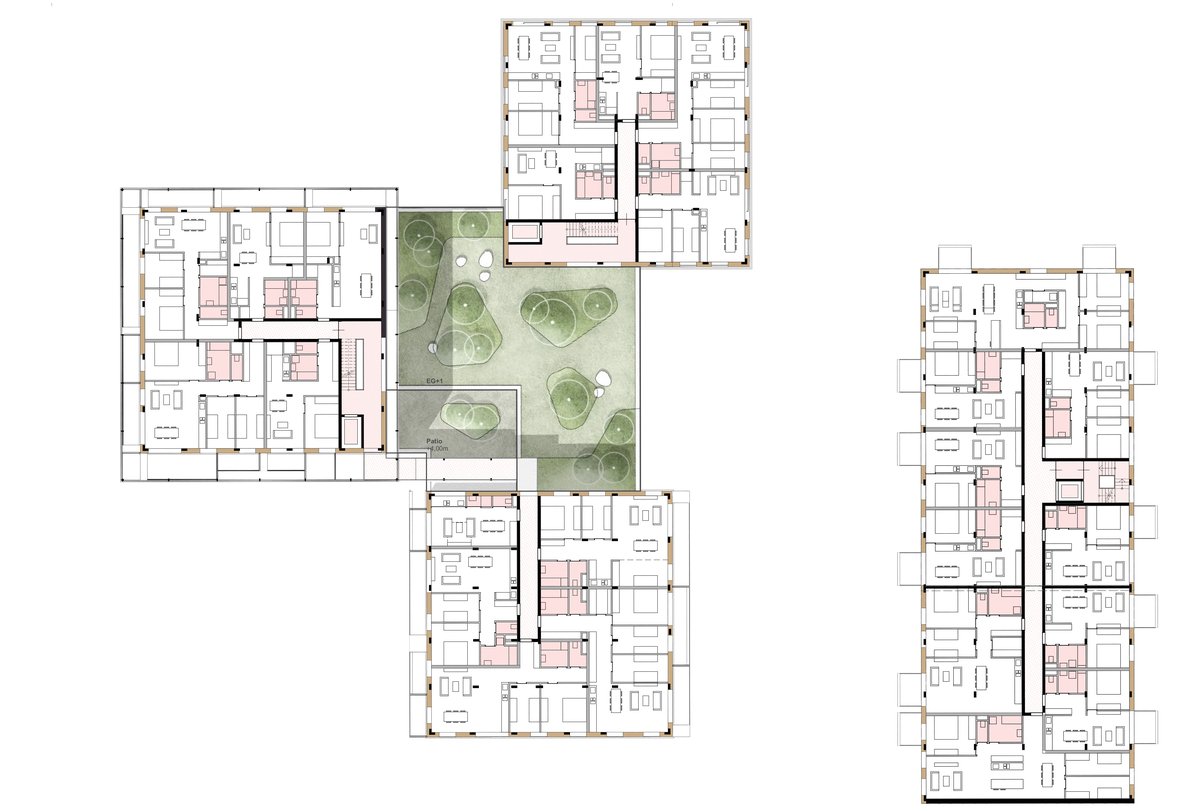
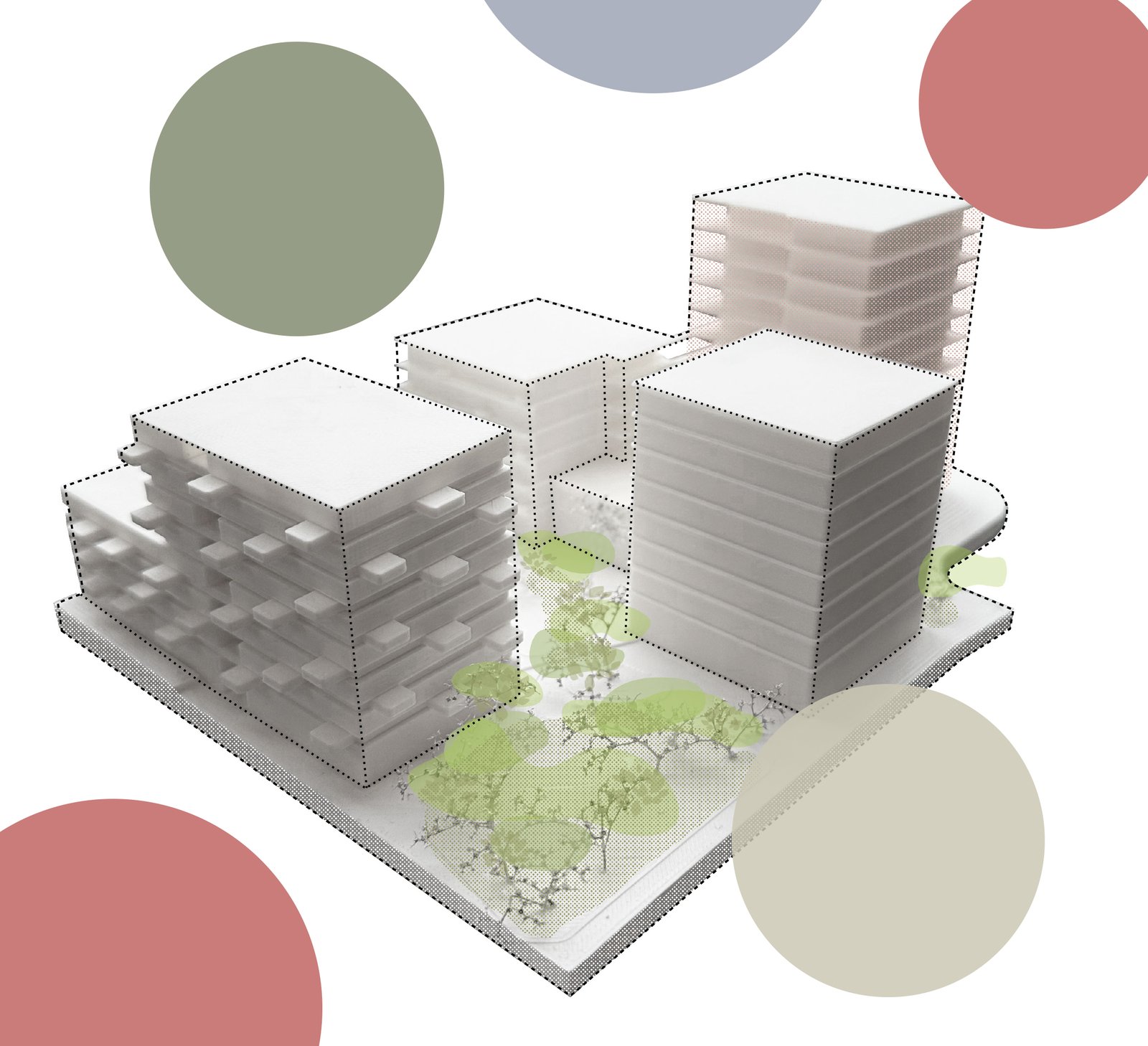
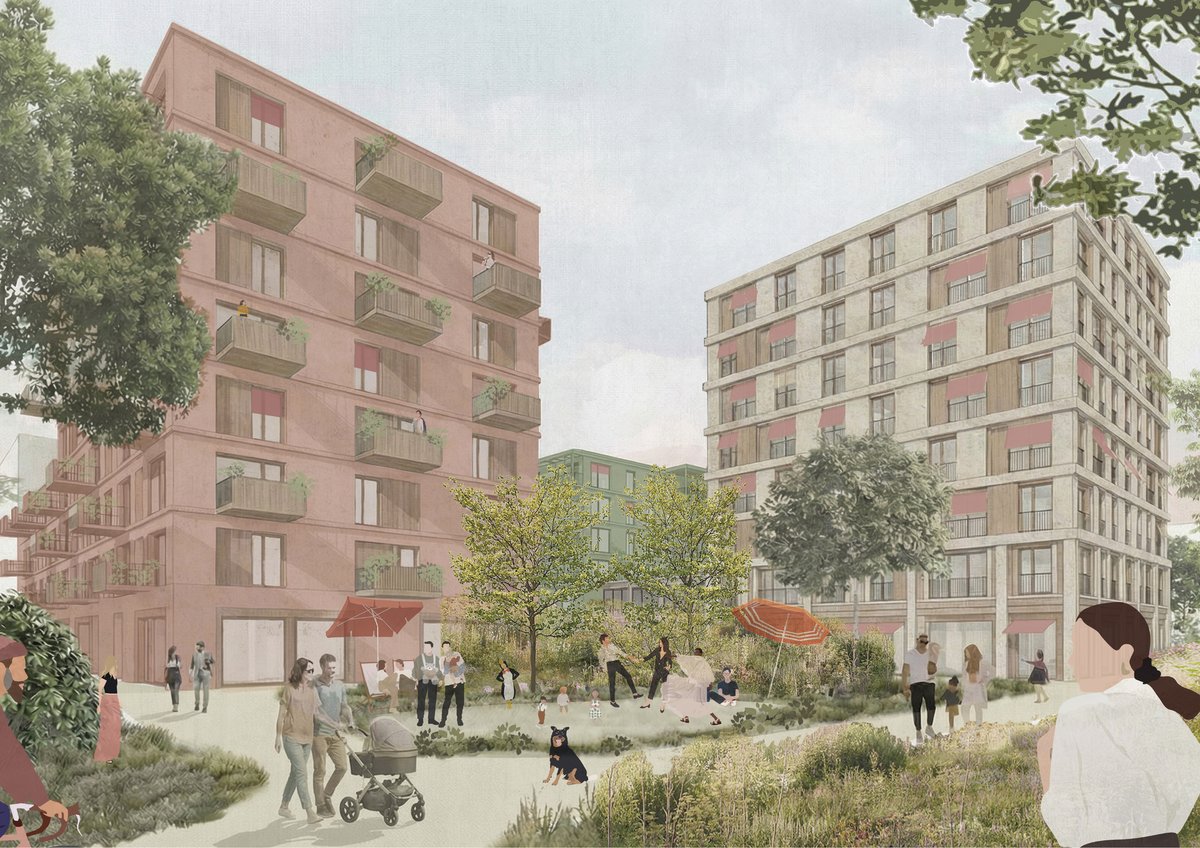
BWM were the winners of the competition for plot L1 of the Stadtquartier Eibengasse urban development. This privately financed project, comprising four structures with a total of 170 units, is conceived as a long-term, adaptable and resource-efficient residential complex. It creates a sustainable basis for diverse living arrangements and community life by combining flexible use, low technical complexity and high-quality open spaces.
On an almost 20-hectare site in Donaustadt district, between Erzherzog-Karl-Strasse to the north and Langobardenstrasse, a new urban quarter with around 2,600 apartments is to be developed, based on a master plan by architecture firm SUPERBLOCK and landscape architects YEWO. Conceived as an integral part of the surrounding urban fabric, this development responds sensitively to its context, complementing and connecting the existing neighbourhoods. Plot L1 holds a prominent position by virtue of its location directly adjacent to the park.
Flexible use & open spaces.
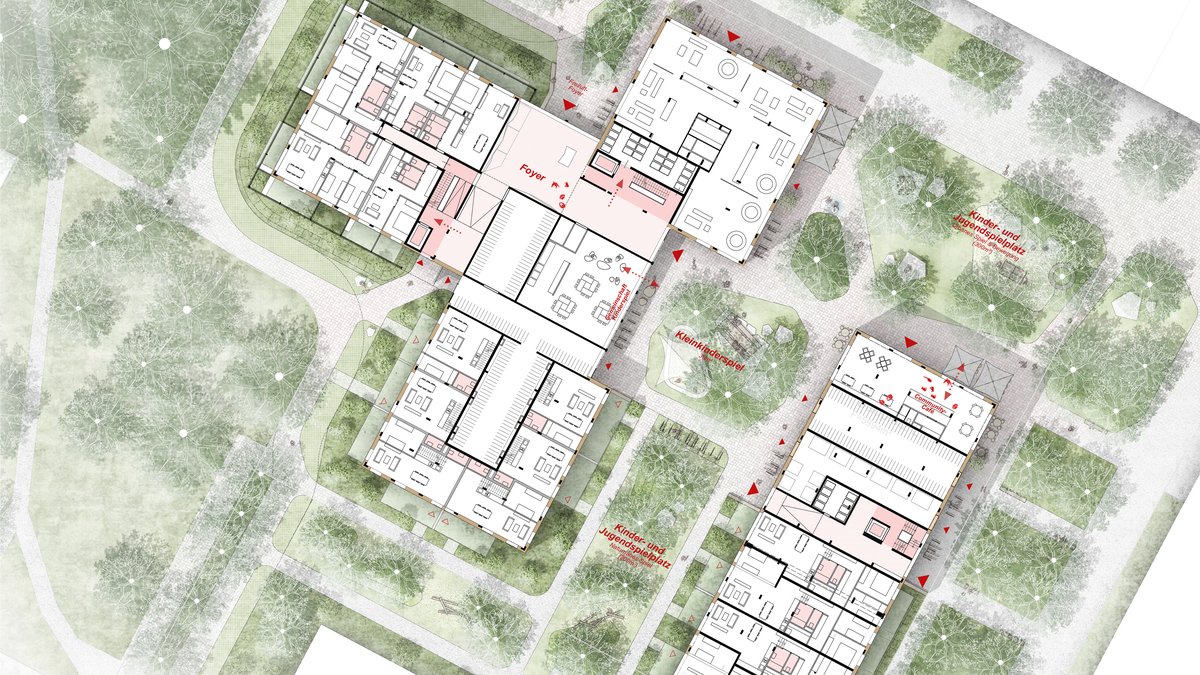
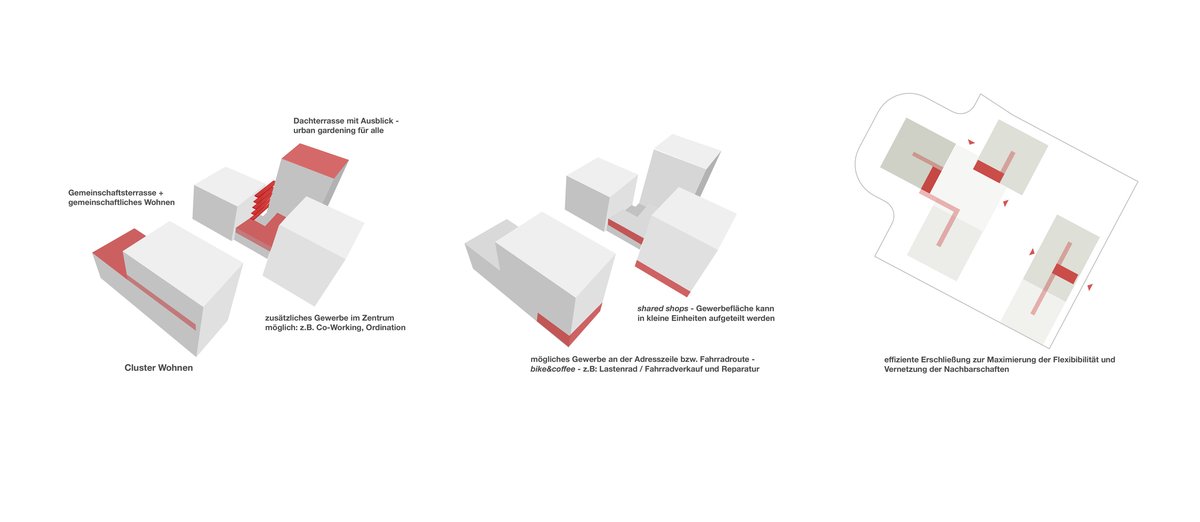
The overall project is guided by the idea of creating resource-efficient housing that can be adapted over the long term. With flexible layouts, low technical complexity and generous open spaces, it aims to create a solid and sustainable framework for diverse living arrangements and community life. It offers a variety of residential typologies, from compact cluster units to two-level maisonettes with garden access, as well as intelligently planned 1- to 4-room flats, many of them with natural light from two sides. The ground-floor flats come with sloped front gardens, and the bedrooms are either slightly raised (about 80cm) or, alternatively, located on the first floor. Running through the development, the central axis features spaces for commercial uses, such as a bicycle café with repair and retail functions, making it an attractive focal space. These spaces are divided into smaller shop-sharing units that can be rented flexibly.
A unifying design principle.
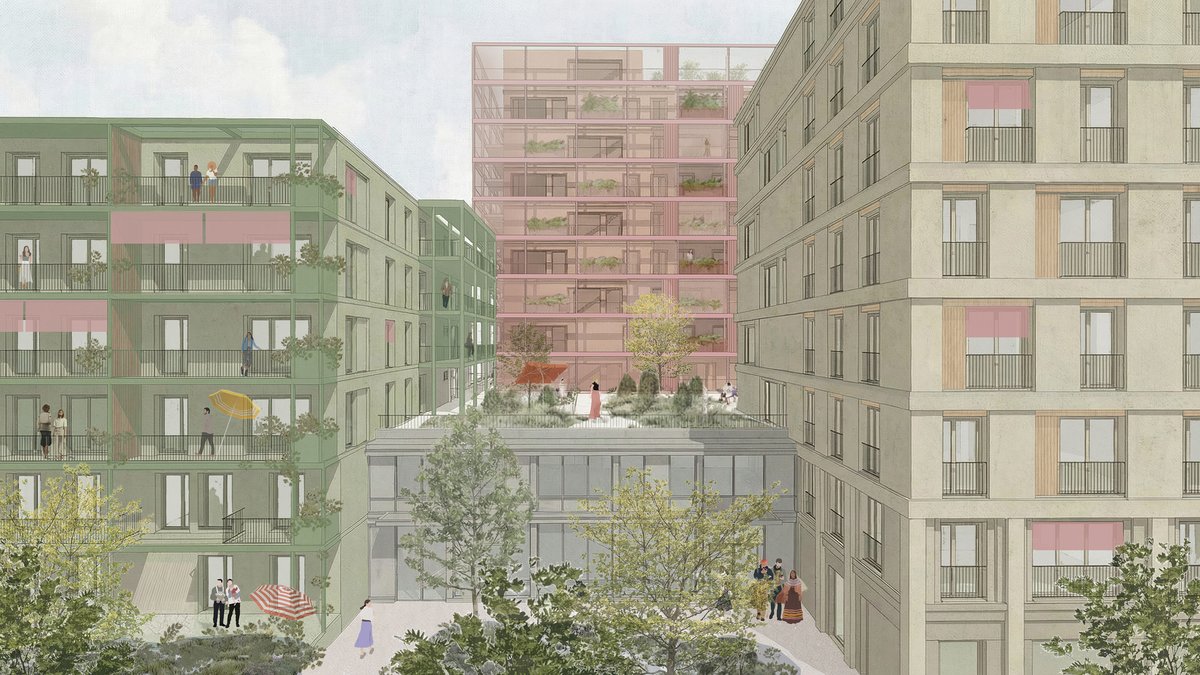
Architecturally, the balconies and loggias of the four structures create continuous private outdoor spaces that wrap around the façades. They also serve fire safety purposes while allowing for floor-to-ceiling glazing. Although the buildings differ in their façade design and colour palette, recurring elements such as consistent window types, cornices, external red sun-shading devices and timber components tie them together. A ventilated rainscreen façade is planned, finished with a coarsely rendered, earth-toned surface. The highest “city crown” forms a vertical accent in a reddish hue and is defined by shading elements, a fine mesh (serving both as fall protection and a frame for climbing plants), and a veil-like, upward lightening gradient. Planter boxes fulfil the requirements for façade greening.
Efficient access.
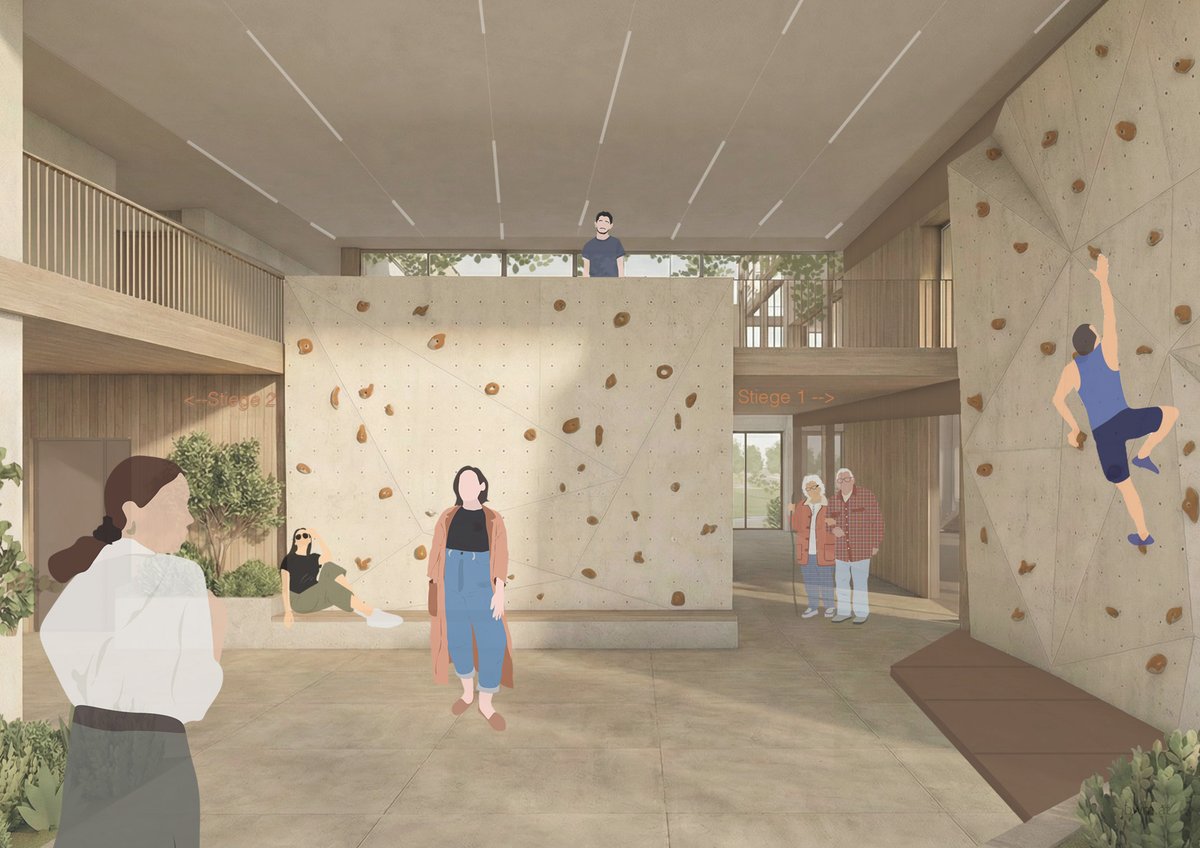
Access is provided from the north via the park and along the central axis. A double-height foyer forms the central hub, with visual connections to the lobby on the first floor, which links the three towers. All stairwells are oriented towards the courtyard, making the internal circulation legible from the outside.
Material-efficient and flexible in use.
The structural and construction concept follows the principle of “shearing layers of change” (where buildings consist of separate layers with long lifespans): It uses a material-efficient reinforced concrete skeleton with minimised steel components. Lateral stability is provided by the core and a small number of shear walls, with load transfer via columns and an open structural grid without load-bearing internal walls. Flat reinforced concrete slabs also act as thermal mass (low-tech). The building envelopes are conceived as non-load-bearing, modular timber stud façade systems, designed for dry assembly and disassembly, with layer configurations that can be adapted to meet varying fire safety requirements. The open structural system and modular façades ensure long-term adaptability.
A lively square for the neighbourhood.
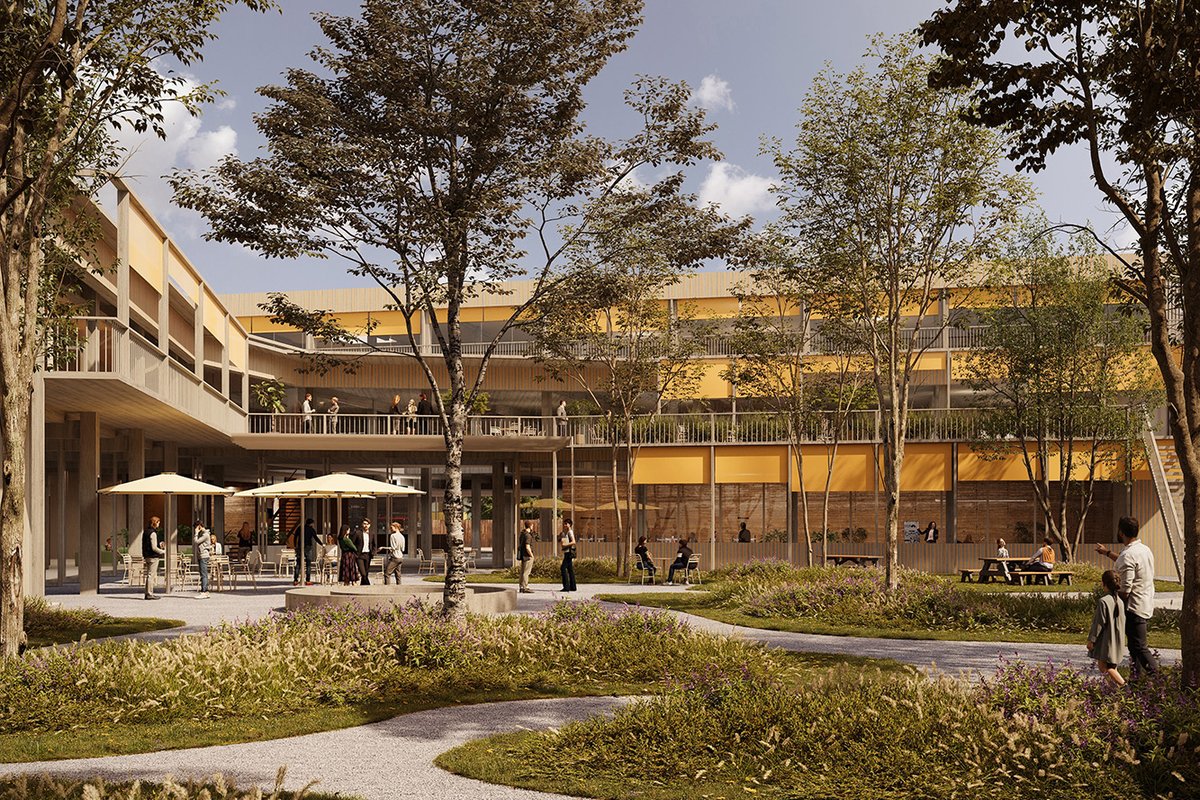
There are three distinct open areas, each of which has its own atmosphere: a lively square as an extension of the public realm, featuring urban play elements and activated ground-floor zones; a communal central area with a play area for small children and a shared terrace; and a quiet, densely planted residential courtyard with a hilly landscape, nature-based play features, and planting frames that provide privacy while also creating habitat value. In addition, nature-oriented rooftop gardens are planned to offer space for gardening, relaxation or yoga.
Task
Competition for Stadtquartier Eibengasse, plot L1, privately financed Viennese residential housing comprising 170 units
Status
Competition
01/2026
Client
immo 360grad/ÖSW AG
BWM Team
Markus Kaplan, Alexandra Stage, Han-Kyol Kim, Luka Rados, Fiona Kastner, Maxime Lorenzoni, Yildiz Tavacioglu, Paul Gaunersdorfer
Image credit
Renderings und Pläne: BWM Designers & Architects
Participants
Projektpartner
Gerhard Gölles
Landschaftsplanung
Carla Lo Landschaftsarchitektur
Statik
Zotter Litschauer ZT GmbH
Related news
18 March 2026
Gewonnen!
We have won the competition Eibengasse urban district BP L1, a privately funded residential development in Vienna comprising 170 flats – we are delighted, congratulations to the whole team and our partners!